Airport concession food and beverage brands
Restaurant Licensing Group licenses federally registered food and beverage brands for airport concessions. If you are sourcing airport concession brands for a proposal or an existing lease, each license includes a style guide, logo files and core menu content with food photography, for units airside or landside.
- Airside gate units
- Landside counters
- Kiosks and grab-and-go
- Food-hall stalls
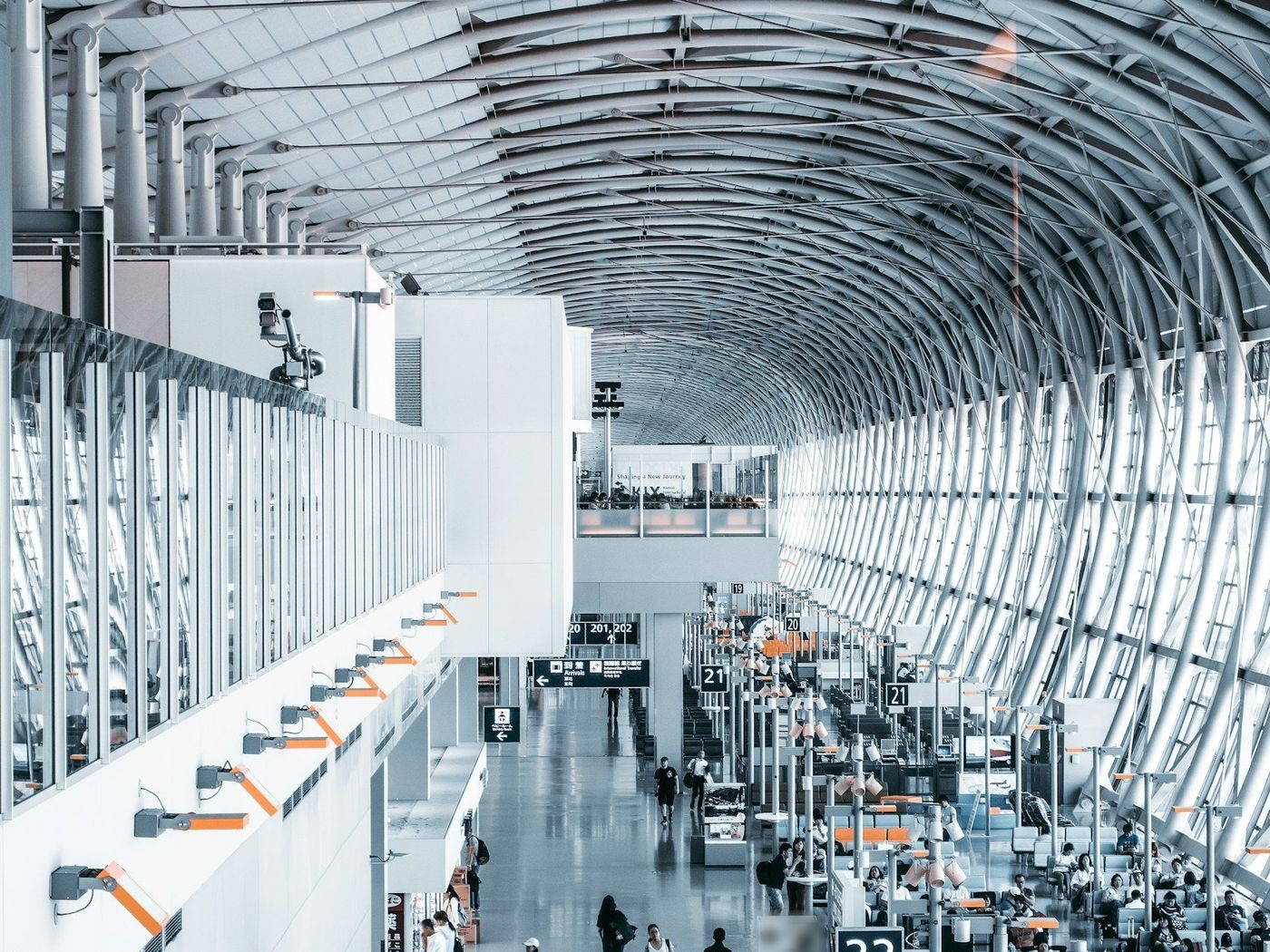
Where airport concession brands fit in a terminal
An airport’s food program is divided by the security checkpoint. Units past screening are for passengers waiting to board; units before it are open to anyone in the terminal, including people who are not flying and the airport’s own workforce. Each side has its own rules for deliveries, staffing and hours. A licensed brand supplies the name, core menu and artwork, and your team fits them to the space the airport has leased to you.
Airside units past security
Gate-area counters and concourse storefronts are for travelers who have cleared screening and are waiting for a flight. Space is tight, and a unit may sit between two gate lounges with seating shared across the concourse. A brand with a compact menu may suit a narrow counter, depending on the equipment the unit has, and your team applies its logo and colors under the style guide, within any design standards the airport sets for tenant storefronts.
Landside units for meeters, greeters and employees
Before security, the guests change: people collecting arriving passengers, travelers checking bags, and airport staff starting or ending a shift. Landside units tend to sit in ticketing lobbies, baggage-claim halls or near ground transportation. A brand you license for an airside unit can also run here if both locations are in your license agreement, or a different brand can give the landside unit an identity of its own.
Kiosks, grab-and-go and food-hall stalls
Not every airport unit has a full kitchen. Kiosks and grab-and-go cases often rely on items prepared elsewhere or finished with minimal equipment, while food-hall stalls share seating and sometimes back-of-house space with other tenants. A short core menu may be worth considering for these formats, although what you can offer from a given footprint depends on its equipment, ventilation and the hall’s own rules. In a shared hall, the landlord or master concessionaire may set rules for signage and seating, and your team applies the style guide within them.
Designing around the traveler’s clock
Airport food service follows the flight schedule rather than a lunch-and-dinner pattern. A terminal can be busy before sunrise, calm by mid-morning and busy again as evening departures board. Travelers also face a constraint that street-side guests rarely do: a gate change or boarding call can pull them away from the counter at any moment.
Early departures and late arrivals
Units near gates may open before the earliest flights and stay open for late arrivals, depending on the hours set in your concession agreement. Long operating days usually mean split shifts, and a menu with few components may be easier to hand over from one crew to the next, depending on your prep and staffing. Your team sets opening hours, staffing and prep schedules within the terms the airport sets.
Boarding calls and food that travels
Many travelers carry food to the gate or onto the aircraft, so how an item holds up in a bag or on a tray table matters as much as how it looks at the counter. The logo files and style guide can be applied to the packaging your operation sources, and the food photography can be used on your menu boards and ordering screens. Packaging, holding practices and food-safety limits for carried food stay with your team and your own food-safety program.
Working inside the airport concession model
Airports usually manage food and beverage through a concession program. Space may be leased to a prime concessionaire, split among several direct operators, or leased to a developer who sublets individual units, and tenants are generally chosen through a formal solicitation. The airport’s program shapes which concepts fit each location, and your team decides whether a licensed brand belongs in your proposal.
Prime concessionaires, subleases and who holds the license
In a terminal, the business running a unit is not always the business that holds the lease with the airport. A prime concessionaire may operate some units itself and sublet others, and a developer may lease space to several independent operators. The license generally sits with whoever runs the unit day to day. Once we understand who leases what, the license agreement sets out the covered units, the term, and any territory or exclusivity.
Documents we can provide for a proposal
On request, we provide copies of the USPTO registration records, which show who owns each mark, along with brand materials for your response. Whether those documents meet a solicitation’s requirements, and all evaluation and selection, rest with the airport or the concession operator running the solicitation.
Program requirements and approvals
Each airport sets its own requirements for concession tenants, which can cover storefront design review, menu review, hours of operation and street-pricing policies. Working through those requirements is part of running your concession; the brand kit gives your team materials to submit, not an approval. Menu prices are your decision, made within any pricing terms in your agreement with the airport.
Back-of-house realities in a terminal
Airport kitchens face limits that street-side kitchens seldom meet, and those limits shape which brand suits a unit.
Screened deliveries and limited storage
Goods bound for units past security generally go through screening before they reach the unit, and at some airports they move through a central receiving point. Storage at the unit is often small, so operators may depend on frequent deliveries from a warehouse or commissary. A short core menu can make storage easier to plan, but your supply chain and the airport’s screening procedures decide what is practical.
Compact kitchens, ventilation and equipment
Terminal units often have limited ventilation, and an airport may restrict certain cooking methods in parts of a building. For each unit you have in mind, we compare the brand’s core menu with the equipment you have or plan to install. Ventilation, fire suppression and utilities are governed by the airport’s tenant requirements and local codes, and handled through your own design and permitting process.
Staff credentials and training
People who work past security usually need airport-issued credentials, arranged through the airport’s own badging process. Because each brand is built around a short core menu, there may be fewer items for new staff to learn, although how you train them is up to your team. Hiring, credentialing and scheduling remain your responsibility as well.
Other brands and other properties you operate
Airport concessionaires often run several differently named units in one terminal. A license agreement can list more than one brand and location, and each addition is covered once it is written into the agreement. If you are weighing several brands for one unit at different times of day, read how multi-concept brand licensing works. For properties beside the airport, we can talk about the same brands for hotel food and beverage outlets.
What the license includes
Every brand license comes with the same core materials. Here is how each one applies to airports.
-
Federally registered trademarks
Every brand is registered with the U.S. Patent and Trademark Office, and each registration covers specific classes of services. We share the registration record for any brand you are considering, for an airport concession office or prime concessionaire.
-
Logo files and color references
Vector logo files and color references, including Pantone values, to apply to storefront fascias, kiosk panels, packaging labels and printed menus in the terminal.
-
Core menu and food photography
A short core menu for each brand, with food photography for menu boards, ordering screens and any mobile-ordering menu your concession program runs.
-
Brand style guide (PDF)
Defines how the logo, colors, typography, photography and brand voice appear on storefront signage, digital menu boards and grab-and-go packaging, airside or landside.
-
Brand fact sheet (3 pages)
A three-page overview of the brand’s positioning, core menu and intended guest profile, for presenting the concept to an airport’s concession team or in a proposal.
-
Direct licensing contact
One licensing contact who can answer questions and provide copies of the registration records for an airport concession proposal or your vendor file.
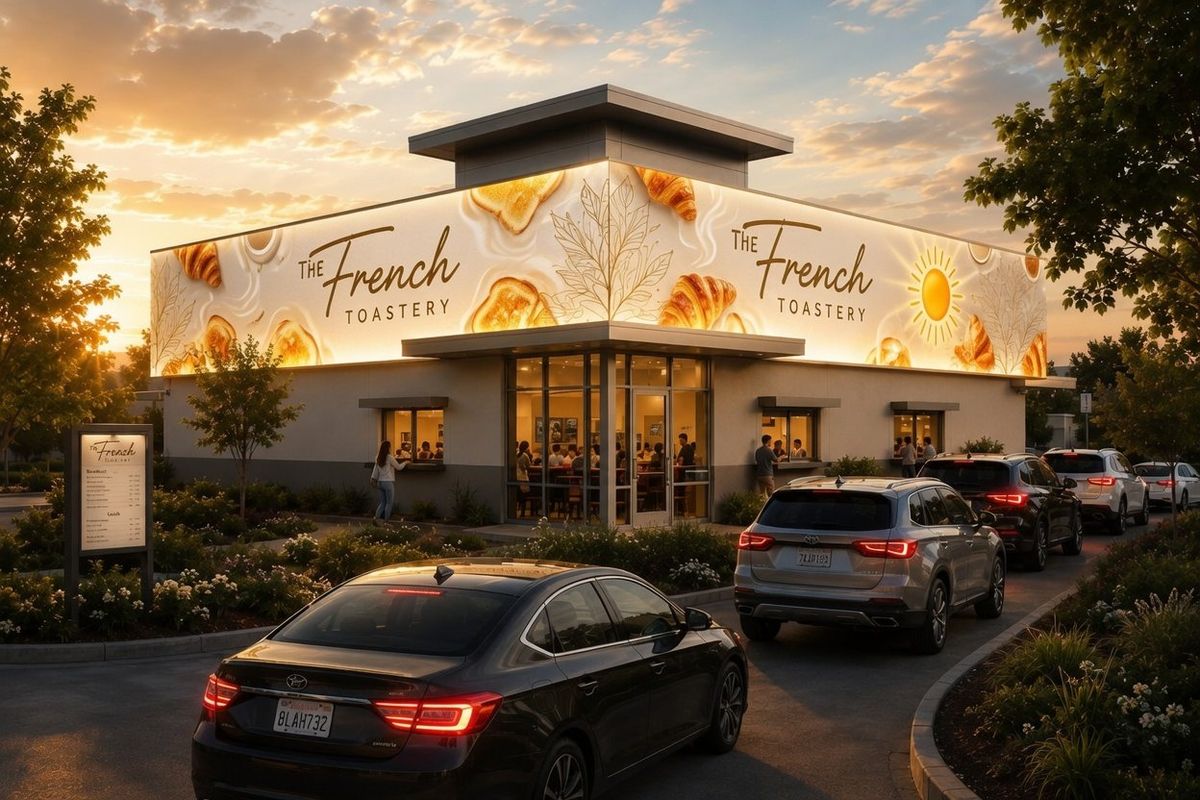
FlexFranchise™
Several brands, one location
FlexFranchise is a multi-concept licensing program: one foodservice location presents different licensed brands at different times of day, using digital signage and menu content that changes by daypart.
Image: concept rendering. Not an actual location.
How FlexFranchise worksHow licensing works
Four steps from first conversation to a brand on your menu board. Timing depends on your venue’s own approvals, signage and menu setup.
-
Tell us about your venue
Share your venue type, the formats you run and the kinds of food you are considering. We’ll suggest brands that fit your kitchen and service style.
-
Review brands and registrations
We share brand overviews, core menus and the USPTO registration record for each brand you are considering, so your team can evaluate them.
-
Sign a license agreement
A written license agreement sets out the brands, the locations covered, the term, and any territory or exclusivity.
-
Receive the brand kit
After signing, you receive logo files, color references, the style guide, core menu content and photography. Your team produces signage and menus from the kit.
Frequently asked questions
Who owns the brand names and logos?
Restaurant Licensing Group, LLC owns the trademarks and brand assets. Your license agreement grants the right to use them at the locations it covers. Territory and any exclusivity are set out in that agreement.
Do we need to build a new kitchen?
Not necessarily. The core menus are designed around equipment common in concession kitchens, such as fryers, griddles and flat-tops. Whether your space needs changes depends on your equipment, layout and local codes, so we review fit with you before you license a brand. If several brands share equipment, plan for allergen cross-contact within your own food-safety program.
Can one brand operate both airside and landside?
Yes, where your license agreement covers both locations. The agreement lists each unit it applies to, so name every location you have in mind, past security and before it, when you contact us. Whether the same core menu works in both places depends on the equipment and storage each unit has.
Can you support an airport concession RFP response?
On request we provide copies of the USPTO registration records and brand materials, such as logo files, core menu content and the fact sheet, for your proposal. Preparing and submitting the response is your team’s work, and evaluation, selection and timing are set by the airport or the concession operator running the solicitation.
Does a brand work for airside grab-and-go?
The core menus are short and can be adapted to grab-and-go formats. Airside food service follows your airport’s rules and security procedures, which your concession operation manages. The logo files, artwork and menu content can be applied to your own packaging and signage within the style guide.
Who sets menu prices under an airport street-pricing policy?
You do. Some airport concession programs have a street-pricing policy that compares terminal menu prices with prices for similar items outside the airport; where one applies, its terms are set by the airport and your concession agreement. Menu prices for a licensed brand are your decision, made within those terms.
How long does it take to open a licensed brand in an airport?
It depends on your airport’s design review and approval steps, signage production, menu setup, staff credentialing and training. After the license agreement is signed, we send the brand kit so your team can start that work. The airport and your concession agreement set the review steps, so we cannot predict how long they will take.
Talk to us about airport brands
Tell us about your venue and the formats you run. A member of our licensing team will follow up by email or phone to learn more and share registration details for the brands you are interested in.