Music festival and EDM event concession brands
Restaurant Licensing Group licenses federally registered food and beverage brands for music festivals and electronic music events. Each brand comes with logo files, a short core menu, food photography and a style guide your team can apply across main-stage stands, campground outlets and late-night service windows.
- Main-stage vending
- Campground outlets
- Late-night service
- Multi-day builds
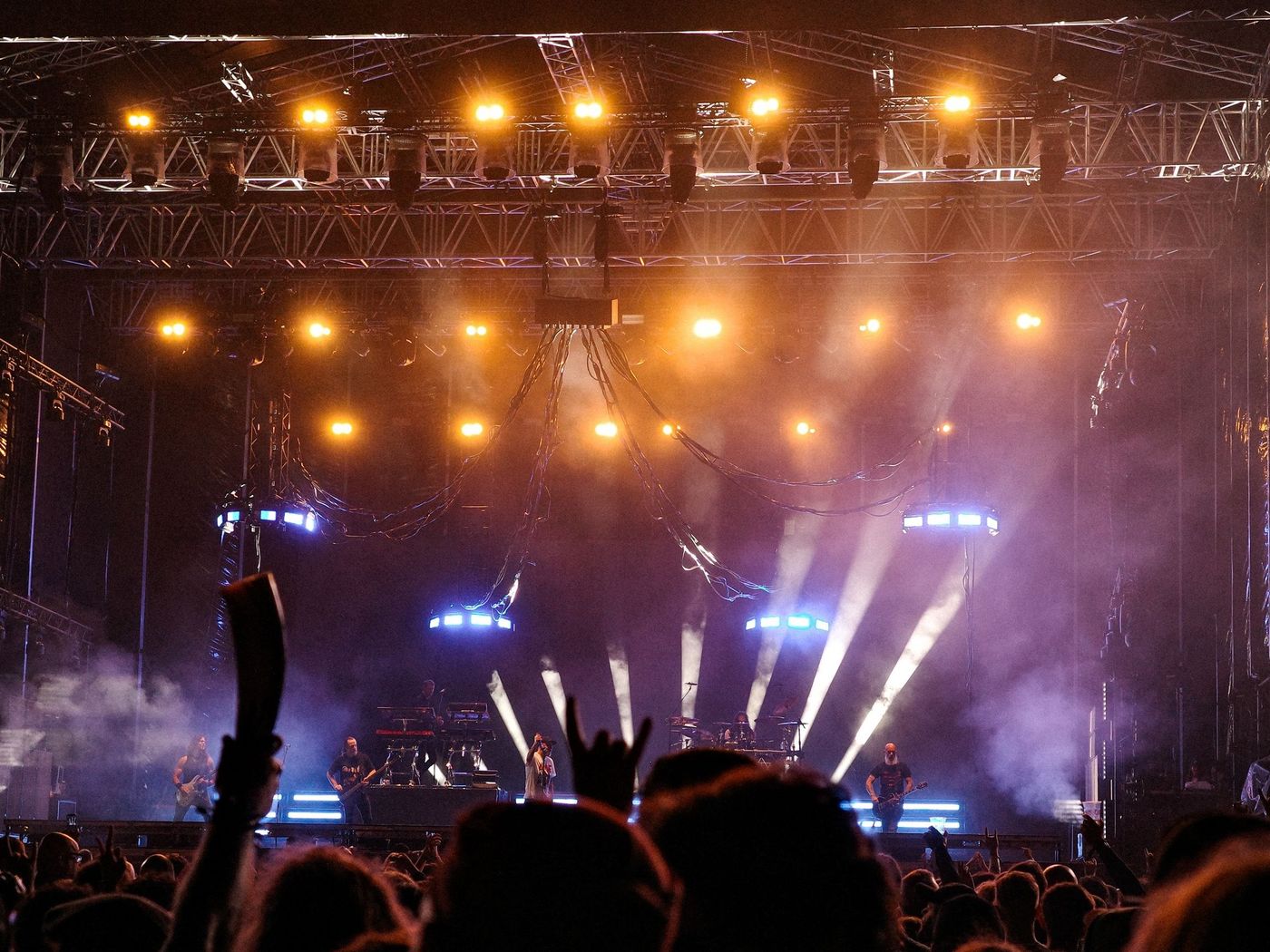
Where licensed brands fit across a festival site
A festival is a food operation that is built, run and taken apart inside a few days. Instead of fixed concourses, you have a site map: a main stage field, secondary stages, a vendor midway, a campground and back-of-house compounds, each with its own hours and its own service windows. A licensed brand gives any one of those positions a name, a defined core menu and finished artwork to build the stand around, rather than a hand-lettered sign that changes every season.
Main-stage and midway vending
Positions nearest the stages are the ones guests see between sets, usually at night and usually at distance. Artwork matters more here than in a permanent building, because a tent header or trailer wrap is competing with stage lighting and LED walls for attention. The kit includes vector logo files and color references your fabricator can take straight to a banner printer, and the style guide defines how the mark sits on a scrim, an A-frame or a hanging menu board.
Campground and camping-area outlets
Multi-day events with camping need service on a different schedule from the stages, often starting early and continuing after the music has finished for the night. A licensed brand can anchor a campground outlet with a short menu suited to a smaller build, so the same operator can run a recognisable name at both a midway position and a camping-area window without inventing a second identity for each.
Late-night and overnight service
Electronic music events frequently run well past midnight, and some sites keep a limited number of outlets open after the last set. Which brand fits that window depends on your kitchen, what your staff can safely produce at that hour and what your permit allows. We share each candidate brand’s core menu so your team can judge that against the shift you actually intend to run.
Hospitality and VIP areas
Many events sell a hospitality tier with its own bar and food area, separate from general admission. A licensed brand can be presented there under the same style guide, with the menu and photography adapted to a smaller, seated setting. What is permitted in those areas is typically defined by the promoter’s hospitality agreement rather than by us.
What changes when the venue is temporary
Almost everything that is fixed at a stadium or an airport is provisional at a festival, and that shapes which brand is a sensible fit:
- Power comes from a distribution plan, not a wall. Generator capacity at your position is allocated by the site electrician, and adding equipment late is rarely simple. Check each brand’s core menu against the load you have been assigned before you commit.
- Water and waste are scheduled services. Potable water fills, greywater pumping and grease collection happen on the site’s rota. A menu that needs constant washing or frequent oil changes behaves differently on a field than in a building.
- Permits are per-event and per-jurisdiction. A temporary food establishment permit, the plan review that goes with it and the on-site inspection are all handled by your business with the local health authority. Requirements differ by county, and nothing in a brand licence changes them.
- Weather is an operating input. Heat, dust, rain and mud affect holding, storage and the practicality of certain items outdoors. Your food-safety plan for the event stays your team’s responsibility.
- Pack-in and pack-out are part of the build. Load-in windows, vehicle passes and strike times are set by the promoter, and signage that survives transport and repeated assembly is worth specifying early with your fabricator.
- Waste and packaging rules vary by site. Some events require compostable or reusable serviceware. Because packaging carries brand artwork, tell us what the site mandates so the style guide is applied to materials you are actually allowed to use.
Deciding which brand suits an event build
Start from the position you have been offered on the site map, not from the brand. A midway trailer with a full cook line, a campground window with two pieces of equipment and a hospitality counter are three different operations, and the menu that works in one may not be practical in another. We walk through the equipment you carry, the crew you can staff for the run and the hours the promoter has scheduled, then share the core menus of the brands that look workable so your team can make the call.
For operators who work a season rather than a single weekend, it is worth deciding early whether you want one brand appearing at every event or different brands for different sites. Both are possible, and both are written into the agreement rather than assumed. Where the same operator runs several positions at one event, a single agreement can cover more than one point of sale, so it helps to list every stand, trailer and window you have in mind when you first make contact.
How licensing works for an event operator
You license the brand from Restaurant Licensing Group and use it at the events and locations your agreement covers. You keep your own business, your own staff, your own supplier relationships and your own permits. We do not take a position in your operation, select your vendors or manage your site logistics.
After an agreement is signed you receive the brand kit: the registration record, vector logo files and colour references, the core menu with food photography, the style guide and a three-page fact sheet. Your fabricator and your crew apply it to the build. If a promoter or a health department asks who owns the name appearing on your tent, you have the registration record to provide.
Territory, the events covered and any exclusivity are set out in each licence agreement. If you want a brand to appear at a recurring event year over year, or across a touring season, say so at the start so that scope is drafted in rather than revisited later.
What the license includes
Every brand license comes with the same core materials. Here is how each one applies to festivals and edm events.
-
Federally registered trademarks
Every brand is registered with the U.S. Patent and Trademark Office. Each registration covers specific classes of services, and we share the registration record for any brand you are considering for an event vendor application.
-
Logo files and color references
Vector logo files and color references sized for tent fascias, trailer wraps, banner scrims and printed menu boards that have to read at distance under stage lighting.
-
Core menu and food photography
A short core menu for each brand, with food photography you can use on hanging menu boards and in the ordering screens an event runs on its cashless system.
-
Brand style guide (PDF)
Defines how the logo, colors, typography, photography and brand voice appear on a temporary build, from a tent header down to the wristband-scan signage at the counter.
-
Brand fact sheet (3 pages)
A three-page overview of the brand’s positioning, core menu and intended guest profile, which vendors often attach to a promoter’s vendor application or site packet.
-
Direct licensing contact
One licensing contact who can answer questions and provide copies of the registration records when a promoter or health department asks what brand will appear on site.
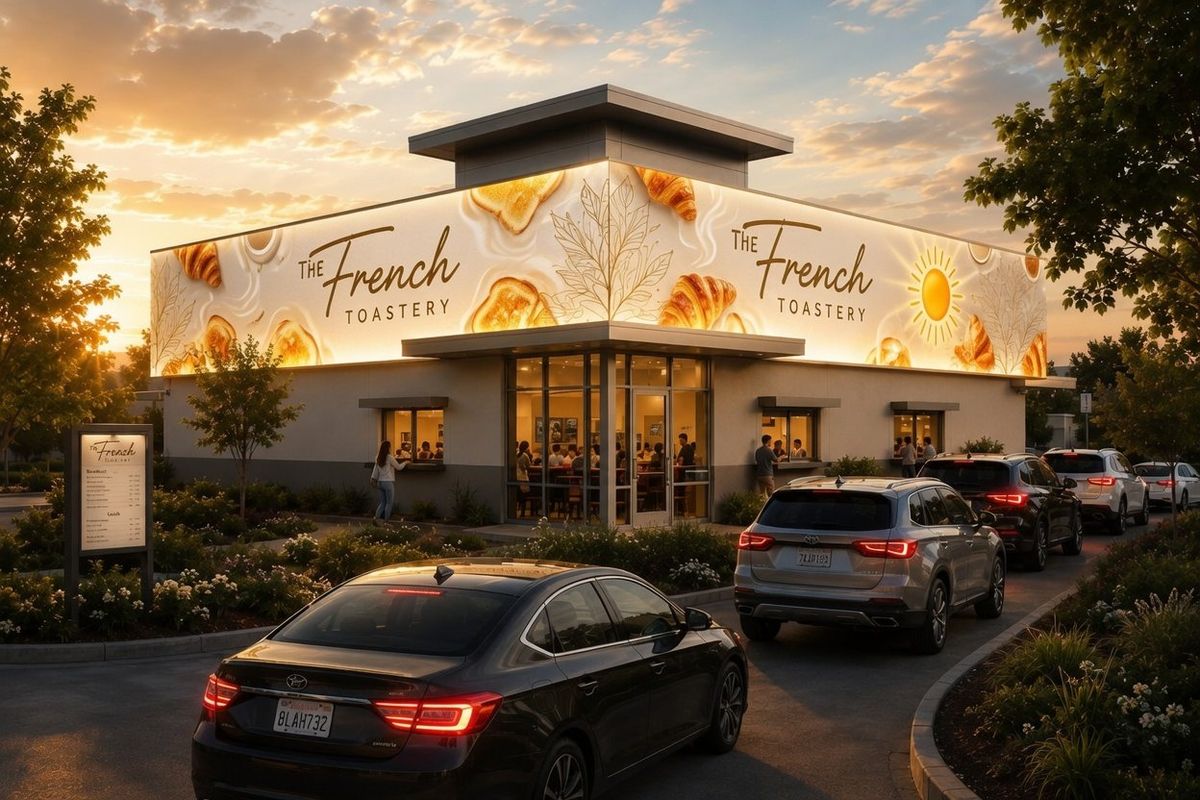
FlexFranchise™
Several brands, one location
FlexFranchise is a multi-concept licensing program: one foodservice location presents different licensed brands at different times of day, using digital signage and menu content that changes by daypart.
Image: concept rendering. Not an actual location.
How FlexFranchise worksHow licensing works
Four steps from first conversation to a brand on your menu board. Timing depends on your venue’s own approvals, signage and menu setup.
-
Tell us about your venue
Share your venue type, the formats you run and the kinds of food you are considering. We’ll suggest brands that fit your kitchen and service style.
-
Review brands and registrations
We share brand overviews, core menus and the USPTO registration record for each brand you are considering, so your team can evaluate them.
-
Sign a license agreement
A written license agreement sets out the brands, the locations covered, the term, and any territory or exclusivity.
-
Receive the brand kit
After signing, you receive logo files, color references, the style guide, core menu content and photography. Your team produces signage and menus from the kit.
Frequently asked questions
Who owns the brand names and logos?
Restaurant Licensing Group, LLC owns the trademarks and brand assets. Your license agreement grants the right to use them at the locations it covers. Territory and any exclusivity are set out in that agreement.
Do we need to build a new kitchen?
Not necessarily. The core menus are designed around equipment common in concession kitchens, such as fryers, griddles and flat-tops. Whether your space needs changes depends on your equipment, layout and local codes, so we review fit with you before you license a brand. If several brands share equipment, plan for allergen cross-contact within your own food-safety program.
Can a licensed brand be used for a single weekend event?
The license agreement sets out which locations and events it covers, so a short run is something we document rather than assume. Tell us the dates and sites you have in mind when you first contact us, and we will put the scope in writing before anything is signed.
Does the brand travel with us to other festivals?
That depends entirely on how the agreement is written. Some operators license a brand for one recurring event; others run the same brand across a touring season. The events, locations, and any territory or exclusivity are set out in that agreement.
We run from a trailer and a tent, not a fixed kitchen. Does that work?
Each brand is built around a short core menu, which is usually easier to fit into a temporary build than a long one. Whether a specific menu suits your trailer depends on the equipment you carry, the power available at your spot and the water and waste hookups the site provides, so we review that with you first.
Who deals with the promoter and the temporary event permit?
You do. Vendor selection, site fees, the temporary food establishment permit and the health department inspection all stay between your business, the promoter and the local authority. We supply the brand materials and the registration records you may need to include in those applications.
Can the brand appear in the festival app or on a cashless ordering screen?
The logo, menu descriptions and food photography can be used in the ordering system an event runs, within the style guide. Getting the menu built into that platform is handled by your team and the event’s technology provider, since each festival uses its own system.
Talk to us about festival and event brands
Tell us about your venue and the formats you run. A member of our licensing team will follow up by email or phone to learn more and share registration details for the brands you are interested in.