Theme park and amusement park concession brands
Restaurant Licensing Group licenses federally registered food and beverage brands for theme parks, amusement parks, water parks and family attractions. Your team can apply a brand at the carts, kiosks, snack bars or park restaurants your license covers, while your lands, stories and characters stay under your control.
- Counter-service restaurants
- Carts, kiosks and portables
- Water park snack bars
- Seasonal event stands
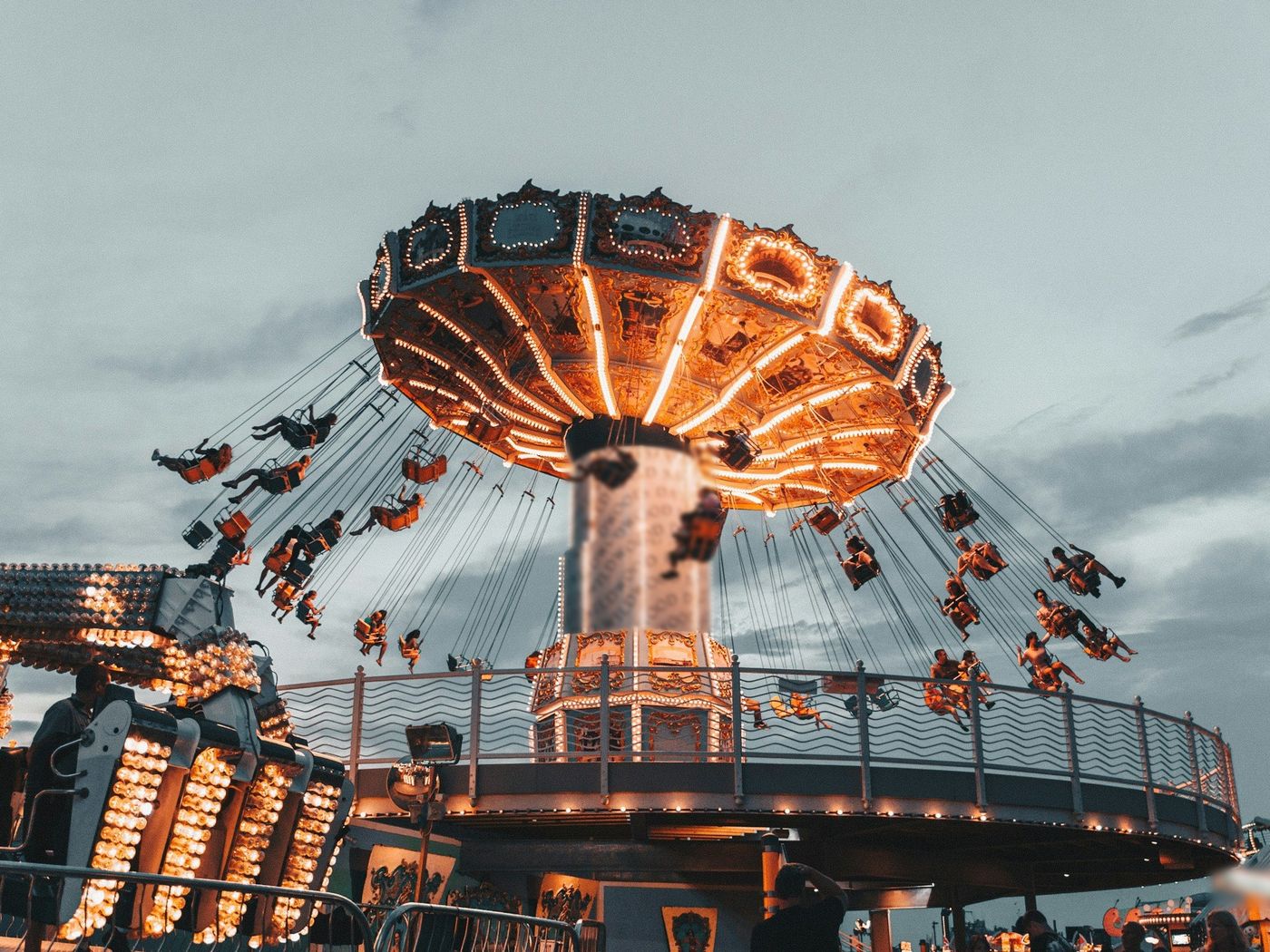
Formats for amusement park concession brands
A park’s food program rarely looks the same from one end of the midway to the other: a counter-service restaurant inside the front gate, carts near the coasters, a snack window beside the wave pool, a stand that opens only for a fall festival. Amusement park concession brands give your food and beverage team another option for those units. A licensed brand’s logo, core menu and food photography can be applied at the units your license agreement lists.
Quick-service restaurants
These restaurants usually have a full kitchen, several registers and covered or indoor seating, and many sit inside a themed land. A licensed brand can be the identity for a whole restaurant or for one counter in a multi-counter building, with menu boards and wall graphics produced by your team from the brand files. Whether a brand’s core menu suits a given kitchen depends on its equipment and layout.
Carts, kiosks and portables
Carts and kiosks take food service where a building cannot go: ride exits, parade routes, show plazas and the long walks between lands. The brand’s logo and colors can be applied to cart panels, umbrellas and kiosk canopies following the style guide, so a small unit reads as the same brand guests may have seen at a larger stand elsewhere in the park.
Water parks
Water park guests often eat in swimwear at shaded tables near the pools, which shapes container choices and how signage stands up to sun and splashing. The logo files can go on weather-resistant signs and on the cups and containers your team sources. Rules about food and glass near the water sit with your operations team.
Zoos, aquariums, family entertainment centers and fairs
Zoos and aquariums often pair a few fixed cafés with seasonal carts along the visitor route. Family entertainment centers tend to run one counter for the arcade, bowling lanes and party rooms, and fairs rely on temporary stands put up each year. A brand can be discussed for any of these settings, as long as the license agreement names each location. Outlets at a park’s amphitheater or on-site lodging can be discussed the same way. Concert nights are planned much like event-day stands at stadiums and arenas, and park lodging works more like hotel and resort food outlets.
Planning for peak days, weather and seasons
Attendance at a park can change sharply from one day to the next. A mild spring weekday may bring a small share of the guests who come on a July holiday weekend, a thunderstorm can empty the midway in an afternoon, and seasonal parks close for months at a time. A licensed brand has to make sense on the slowest days as well as the busiest.
Opening and closing units through the year
Many parks open every stand only on peak dates and run a smaller core the rest of the time, so a brand at a secondary kiosk might operate only on weekends, holidays or event nights. Signs and menu panels made from the brand files can be stored over the closed season and reused, as long as they still match the current style guide.
Hot days, storms and open-air service windows
Many park stands serve through an open-air window, so the weather reaches the counter. On hot afternoons, which items a window can hold depends on the unit’s equipment and your food-safety program, and when a storm moves through, open-air stands may shut their windows while covered restaurants stay open. Short menus are meant for lines that keep moving, although actual service times depend on your equipment, staffing and layout. Which units close in bad weather is your operations team’s call.
Seasonal hires
Park food service leans on seasonal hires, often younger or first-time workers who start in the weeks before opening and may be moved between stands as crowds shift through the day. When the same licensed brand runs at a kiosk and at a counter-service building, both units work from the same item names and food photography in the brand kit. Hiring, training and shift assignments belong to your seasonal staffing program, and your park sets its own service standards.
Families at the counter
Park food lines are full of groups deciding together, often with children reading the menu board over a parent’s shoulder. The brand’s food photography can sit beside each item name on the menu board, following the style guide, and your team decides how the board is laid out.
Smaller portions for younger guests
Many parks offer smaller portions or a children’s option. If you would like to do that with a licensed brand’s items, raise it with us early, since the way those items are named and shown on menu boards follows the style guide. Portion sizes, pricing and any nutrition labeling are your team’s decisions.
Allergen and ingredient questions
Parents often ask about allergens before ordering for a child. The answers depend on your suppliers’ products and on any fryers or prep surfaces a stand shares with other menus, so your food-safety program prepares and discloses that information. Your menu boards and counter signage can carry those notices alongside the brand’s artwork, and your counter staff need to know where to find the details.
Theming a licensed brand inside your park
Themed lands are designed down to the lamp posts, and a licensed brand arrives with an identity of its own: a logo, colors, typography, photography and a brand voice defined in the style guide. The two can sit side by side, but they stay separate. The brand’s marks are not redrawn in a land’s style or merged with your characters, logos or land names, while the building, facade details, props, costumes and landscaping around them remain your park’s design.
A license from us covers our trademarks and brand assets only. Your park’s characters, stories and other intellectual property stay under your control and your approvals. If your park has its own review steps for outside brands in a themed area, those run on your schedule. Signage that places our marks in a themed setting follows the style guide, and any co-branded use is reviewed under it.
Dining plans, mobile ordering and cashless payment
Many parks sell food through systems that sit outside the counter: all-day dining plans and meal vouchers, the park app, and cashless wristbands, stored-value cards or contactless payment. A licensed brand is added to those systems by your team rather than replacing any of them. Plan rules, prices and payment settings stay with you.
Mobile ordering and pickup windows
If your park app lets guests order ahead and choose a pickup time, a guest could place an order while waiting in a ride queue and collect it at the stand afterward. The brand’s item listings in that app can use the kit’s menu content and food photography, entered by your digital team or technology provider, and the signs at the pickup window can be produced from the same brand files. Pickup time slots and order limits are configured in your park’s own ordering system, and your team decides how the pickup window is staffed.
What the license includes
Every brand license comes with the same core materials. Here is how each one applies to theme and amusement parks.
-
Federally registered trademarks
Every brand is registered with the U.S. Patent and Trademark Office, and each registration covers specific classes of services. We share the registration record for any brand you are considering, for your park’s legal or brand-standards review.
-
Logo files and color references
Vector logo files and color references, including Pantone values, for applying the brand to kiosk canopies, cart panels, stand signage, cups and printed menus.
-
Core menu and food photography
A short core menu for each brand, with food photography your team can use on menu boards, in the park app and in printed dining guides or maps.
-
Brand style guide (PDF)
Defines how the logo, colors, typography, photography and brand voice appear on stands, carts, menu boards and park signage, and is the reference for reviewing any co-branded use.
-
Brand fact sheet (3 pages)
A three-page overview of the brand’s positioning, core menu and intended guest profile, for presenting the concept to park operations or food and beverage leadership.
-
Direct licensing contact
One licensing contact who can answer questions and provide copies of the registration records for a proposal, a vendor file or your park’s intellectual property review.
How licensing works
Four steps from first conversation to a brand on your menu board. Timing depends on your venue’s own approvals, signage and menu setup.
-
Tell us about your venue
Share your venue type, the formats you run and the kinds of food you are considering. We’ll suggest brands that fit your kitchen and service style.
-
Review brands and registrations
We share brand overviews, core menus and the USPTO registration record for each brand you are considering, so your team can evaluate them.
-
Sign a license agreement
A written license agreement sets out the brands, the locations covered, the term, and any territory or exclusivity.
-
Receive the brand kit
After signing, you receive logo files, color references, the style guide, core menu content and photography. Your team produces signage and menus from the kit.
Frequently asked questions
Who owns the brand names and logos?
Restaurant Licensing Group, LLC owns the trademarks and brand assets. Your license agreement grants the right to use them at the locations it covers. Territory and any exclusivity are set out in that agreement.
Do we need to build a new kitchen?
Not necessarily. The core menus are designed around equipment common in concession kitchens, such as fryers, griddles and flat-tops. Whether your space needs changes depends on your equipment, layout and local codes, so we review fit with you before you license a brand. If several brands share equipment, plan for allergen cross-contact within your own food-safety program.
Can we theme a stand to match one of our lands?
The setting can be themed; the marks themselves are not redrawn. Your park designs the architecture, props and landscaping around the stand, while the brand’s logo, colors and typography follow the style guide. Any use that combines our marks with your theming is reviewed under that guide, so share your plans with us early.
Can the brand appear alongside our park characters?
Any co-branded use of our marks is reviewed under the style guide. A license from us gives no rights in your characters, and whether to pair them with an outside brand is a decision for your own intellectual property and entertainment teams.
Our park is seasonal. Can a brand run only while we are open?
A licensed brand can follow the calendar your park already keeps. Opening dates, weekend-only schedules and special-event hours are set by your operations team, while the license agreement defines the locations that may use the brand and its term.
Can licensed items be part of an all-day dining plan?
That is your park’s decision. Dining plans, meal vouchers and their rules run through your own ticketing and point-of-sale systems, so your team chooses whether a licensed brand’s items qualify and how they are priced and rung up. The brand name and food photography can appear in plan materials, following the style guide.
Will a brand’s menu work from a cart or kiosk?
Sometimes, with adaptation. Each brand’s menu is short, so part of it may suit a cart or kiosk, but that depends on the unit’s equipment, holding space, power and water, and on your local codes for mobile food units. We look at the specific unit with you first, before any license covers it.
How long before a licensed stand can open in our park?
Timing depends on several steps, including signing the license agreement, your park’s internal approvals for outside brands, signage production, menu setup in your point-of-sale system and app, staff training, and where the opening falls in your operating season. After the license agreement is signed, we send the brand kit so your team can begin producing signs and loading menus.
Talk to us about theme and amusement park brands
Tell us about your venue and the formats you run. A member of our licensing team will follow up by email or phone to learn more and share registration details for the brands you are interested in.